
User Experience as a Safety-Critical Factor in Medical Device Design

Insights from World Usability Day 2025

15 November, 2025

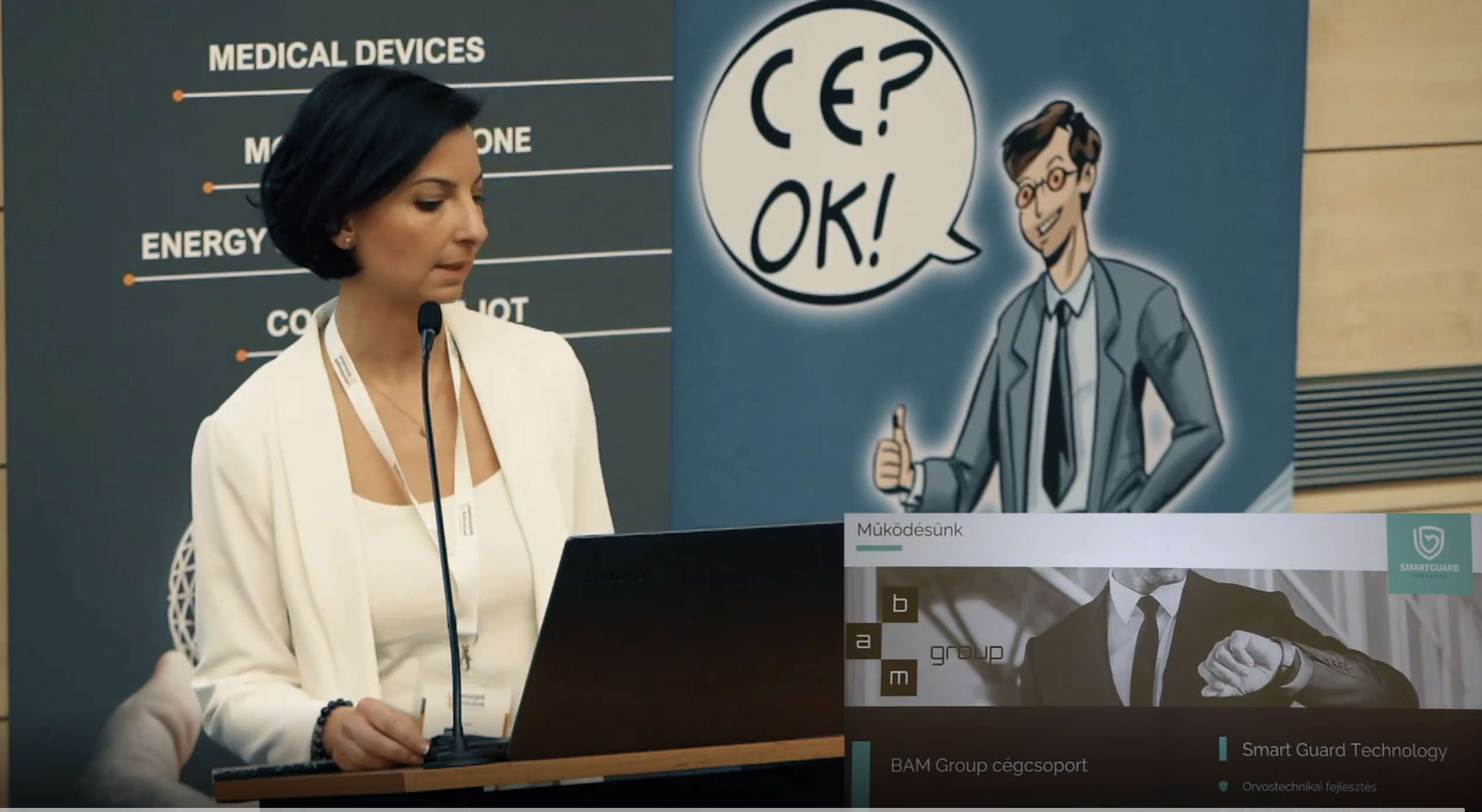
In 13 November 2025, Smart Guard Technology participated in the Hungarian edition of World Usability Day, an international initiative dedicated to advancing human-centered design across industries. The presentation focused on a topic that is becoming increasingly central in medical technology: the relationship between user experience and safety in device design.

As medical devices move beyond clinical environments and into everyday use, the traditional understanding of usability is no longer sufficient. Devices are no longer operated exclusively by trained professionals, but by patients themselves, often in uncontrolled, real-world conditions. In this context, user interaction is not merely a matter of convenience—it becomes a critical factor influencing the reliability and safety of the system.

The presentation addressed this shift by examining how design decisions directly affect clinical outcomes. In wearable ECG systems, for example, the accuracy of a measurement depends not only on sensor performance or algorithmic processing, but also on how intuitively the user can operate the device. If interaction is unclear or requires unnecessary effort, the likelihood of incorrect usage increases, which in turn may compromise the quality of the collected data.

This perspective aligns with the growing emphasis within regulatory frameworks on usability engineering as part of risk management. The challenge is no longer simply to design devices that function correctly, but to ensure that they can be used correctly in practice. This requires a deeper integration of human factors into the development process, where user behavior is treated as an integral component of system performance.

The discussion at World Usability Day also highlighted the gap between controlled testing environments and real-world use. While laboratory conditions allow for precise validation, they cannot fully capture the variability of everyday scenarios. As a result, medical devices must be designed to remain robust even when used imperfectly, adapting to the realities of human interaction rather than relying on ideal conditions.

Smart Guard’s approach reflects this evolving mindset. By treating user experience as part of the system’s functional architecture, rather than an external layer, the development process can address both technical and human factors simultaneously. This not only improves usability, but also strengthens overall system reliability and supports long-term patient adherence. The growing importance of this topic suggests a broader transformation within the medical device industry. As technologies become more integrated into daily life, the boundary between engineering performance and user experience continues to diminish. In this new context, safety is no longer defined solely by technical specifications, but also by how effectively a device can guide and support its user.

https://saascomed.hu/courses/world-usability-day-szakmai-nap
From Startup to Reference Case

Smart Guard at the “Opportunities and Challenges” Conference 2024

February 12, 2025

On February 1, 2024, the Opportunities and Challenges Conference was held for the sixth time, bringing together key stakeholders of the healthcare and medical technology sectors. The event focused on current innovations, regulatory developments, funding opportunities, and the evolving landscape of healthcare systems, while a parallel exhibition showcased emerging medical technologies and services.

The conference also highlighted the growing importance of data-driven healthcare. Experts from the National Laboratory for Health Security emphasized how system-level capabilities—such as the integration of artificial intelligence into national health data infrastructures—are reshaping the future of diagnostics and care delivery. Discussions extended beyond technology itself, addressing how sensitive health data can be transformed into societal value while maintaining cybersecurity and patient privacy.

Within this professional context, Smart Guard Technology was presented by its partner, SAASCO, as a reference startup project.
This recognition represents an important milestone in the company’s journey. Being introduced as a model case in such an environment reflects not only technological progress, but also the relevance of Smart Guard’s approach within the broader digital health ecosystem.

What makes this particularly significant is the alignment with a fundamental shift in medical technology. The industry is moving away from isolated hardware devices toward integrated, platform-based solutions that combine sensing, data processing, and cloud-based services. Smart Guard’s system—built around a wearable ECG device supported by a scalable software platform—naturally fits into this emerging paradigm.

Being showcased as a reference project by a key partner is therefore more than a moment of visibility. It is a confirmation that the underlying concept resonates with current industry directions, where interoperability, data-driven insights, and scalable architectures are becoming essential.

For Smart Guard, this moment represents both recognition and responsibility: recognition of the work accomplished so far, and responsibility to continue building a solution that meets the expectations of a rapidly evolving healthcare landscape.

Emotional UX in Medical Device Design

Insights from World Usability Day 2024

November 16, 2024

In 2024, Smart Guard Technology participated in the Hungarian edition of World Usability Day, presenting on the role of emotional user experience in medical device design.

Medical device usability has traditionally focused on functionality—ensuring that systems are easy to operate and minimize user error. However, as devices increasingly move into everyday environments, this perspective is no longer sufficient. Users are often patients, not professionals, and their interaction with a device is influenced not only by instructions, but also by confidence, perception, and emotional state.

In wearable ECG systems, these factors have a direct impact on how consistently and correctly measurements are performed. If a device feels unclear or unreliable, users are less likely to engage with it over time, which can affect data quality and continuity.

The presentation highlighted the need to go beyond functional usability and consider how devices are experienced in real-world use. Emotional UX becomes part of the system’s overall design, influencing both user behavior and clinical relevance.

As wearable medical technologies become more integrated into daily life, understanding this connection is essential. Designing for real users in real situations is not only a usability challenge—it is a requirement for building reliable and effective medical systems.

https://www.saasco.hu/treningek/world-usability-day-egy-jobb-vilag-tervezese

Project Management Excellence

Personal Recognition Behind Structured Innovation

November 20, 2023

In November 2023, Dóra Rácz, representing Smart Guard Technology, was awarded the PMI Young Project Manager of the Year distinction.
While the award was granted to her personally, it also reflects the nature of the work carried out within the Smart Guard project—where disciplined project management is inseparable from technological development.

In medical technology, progress is rarely linear. Unlike conventional product development, where iterations can be rapid and flexible, medtech innovation operates within a highly regulated framework. Every design decision, test result, and modification must be documented, traceable, and aligned with established standards. Risk management is not a separate activity but an ongoing process embedded into each phase of development, while quality management systems define how work is structured, executed, and verified.

From a project management perspective, this creates a unique environment. Technical challenges must be addressed in parallel with regulatory expectations, documentation requirements, and long-term validation goals. As Dóra has reflected, one of the key difficulties is maintaining momentum while ensuring that every step remains compliant and reproducible. Progress cannot come at the expense of traceability, and innovation must be framed within a system that can later withstand regulatory scrutiny.

Receiving the award was therefore not only a professional milestone, but also a confirmation of this approach. It highlighted the importance of building a development process that is robust enough to support future certification and scalable enough to integrate with external partners. In practice, this means that project management becomes a central element of product quality, influencing not only timelines and deliverables, but the integrity of the entire system.

The experience also reinforced a broader realization: in medtech, successful innovation depends as much on how a project is managed as on what is being developed. The complexity of integrating hardware, software, clinical validation, and regulatory compliance requires a level of coordination that goes beyond traditional project structures. It demands a mindset where engineering, documentation, and risk awareness evolve together. Within the Smart Guard journey, this recognition serves as an important reminder that behind every validated technology lies a structured process. The award acknowledges an individual achievement, but at the same time it reflects a development philosophy—one where precision, accountability, and long-term thinking are essential to transforming an idea into a clinically relevant medical solution.

https://pmi.hu/nyertes-2023

First Steps into the MedTech Ecosystem

Smart Guard at the “Opportunities and Challenges” Conference 2023

February 3, 2023

Smart Guard Technology’s participation in the “Medtech Opportunities and Challenges” conference in early 2023 marked a defining moment in the company’s journey.
It was not only the first invitation to a professional conference, but also the first step toward a more conscious and deliberate presence in the public and industry space.

Until this point, development had been largely focused on internal research and engineering. The transition toward external visibility required a different mindset: moving from building technology in isolation to positioning it within a broader ecosystem of healthcare stakeholders, regulators, and industry partners. Accepting this invitation was therefore both an opportunity and a milestone—an early validation that the work carried out so far had reached a level of relevance beyond the immediate development environment.

Conferences such as this play a critical role in the medtech sector. They provide a platform where technological concepts are tested not through laboratory results, but through professional dialogue. For Smart Guard, this meant engaging with questions that extend beyond engineering, including how the system aligns with current industry trends, how it fits into existing regulatory frameworks, and how it could integrate into real healthcare workflows.

This type of alignment is particularly important in the case of wearable ECG systems. Such technologies sit at the intersection of multiple domains: hardware development, signal processing, clinical interpretation, and digital infrastructure. Ensuring that these elements form a coherent and scalable system requires continuous feedback from the ecosystem in which the product will eventually operate.

Looking back, this first conference appearance represented more than an introduction. It marked the beginning of a more intentional phase of development, where communication, positioning, and ecosystem integration became part of the overall strategy. It was also a moment of recognition and pride—an early confirmation that the project had reached a stage where it could contribute to professional conversations within the medtech field.

This shift toward public engagement has since become an integral part of Smart Guard’s journey, supporting not only visibility, but also the refinement of the technology itself through continuous interaction with the industry it aims to serve.