Personal Recognition Behind Structured Innovation
November 20, 2023
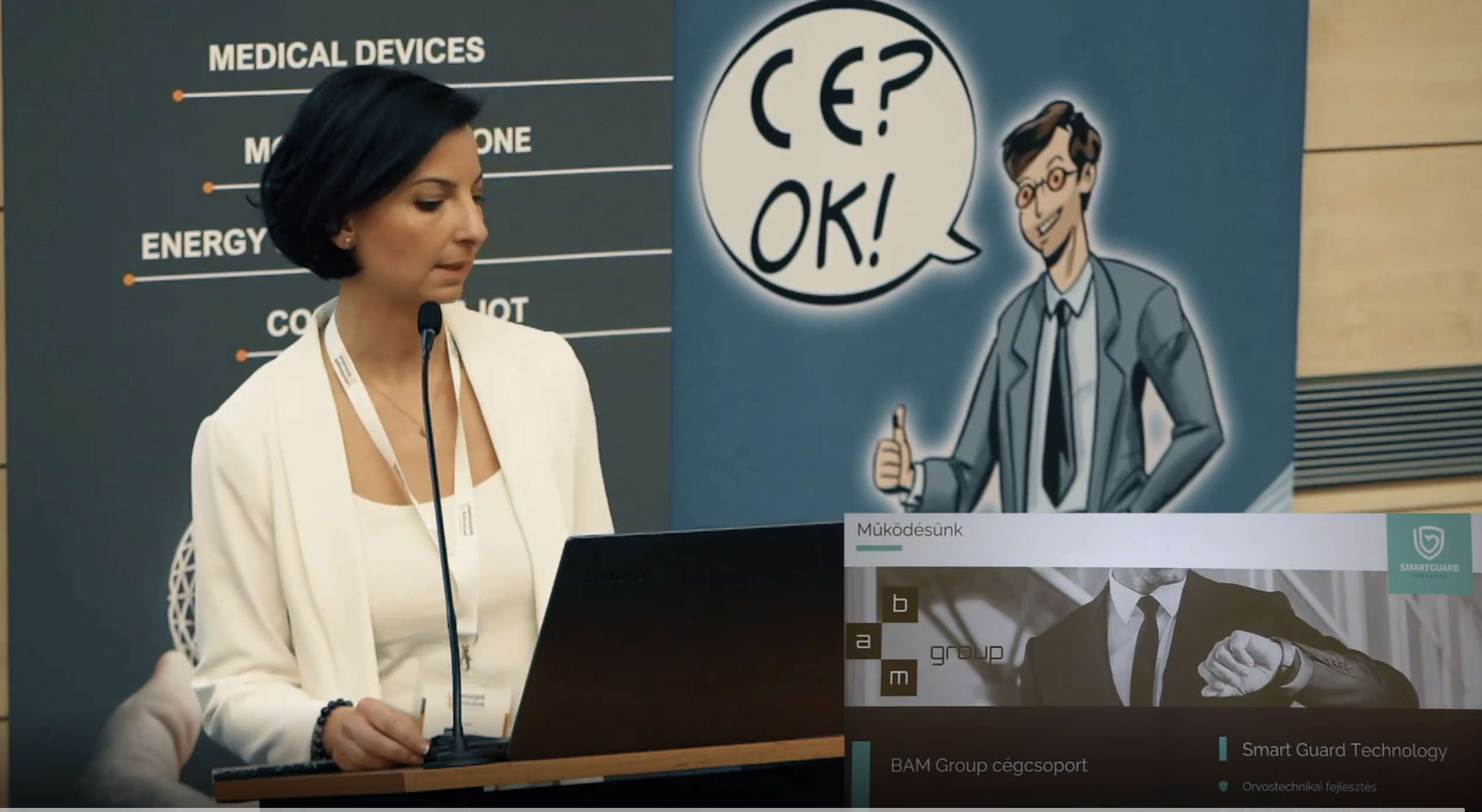
In November 2023, Dóra Rácz, representing Smart Guard Technology, was awarded the PMI Young Project Manager of the Year distinction.
While the award was granted to her personally, it also reflects the nature of the work carried out within the Smart Guard project—where disciplined project management is inseparable from technological development.
In medical technology, progress is rarely linear. Unlike conventional product development, where iterations can be rapid and flexible, medtech innovation operates within a highly regulated framework. Every design decision, test result, and modification must be documented, traceable, and aligned with established standards. Risk management is not a separate activity but an ongoing process embedded into each phase of development, while quality management systems define how work is structured, executed, and verified.
From a project management perspective, this creates a unique environment. Technical challenges must be addressed in parallel with regulatory expectations, documentation requirements, and long-term validation goals. As Dóra has reflected, one of the key difficulties is maintaining momentum while ensuring that every step remains compliant and reproducible. Progress cannot come at the expense of traceability, and innovation must be framed within a system that can later withstand regulatory scrutiny.
Receiving the award was therefore not only a professional milestone, but also a confirmation of this approach. It highlighted the importance of building a development process that is robust enough to support future certification and scalable enough to integrate with external partners. In practice, this means that project management becomes a central element of product quality, influencing not only timelines and deliverables, but the integrity of the entire system.
The experience also reinforced a broader realization: in medtech, successful innovation depends as much on how a project is managed as on what is being developed. The complexity of integrating hardware, software, clinical validation, and regulatory compliance requires a level of coordination that goes beyond traditional project structures. It demands a mindset where engineering, documentation, and risk awareness evolve together. Within the Smart Guard journey, this recognition serves as an important reminder that behind every validated technology lies a structured process. The award acknowledges an individual achievement, but at the same time it reflects a development philosophy—one where precision, accountability, and long-term thinking are essential to transforming an idea into a clinically relevant medical solution.